The AI Marketing Engine.
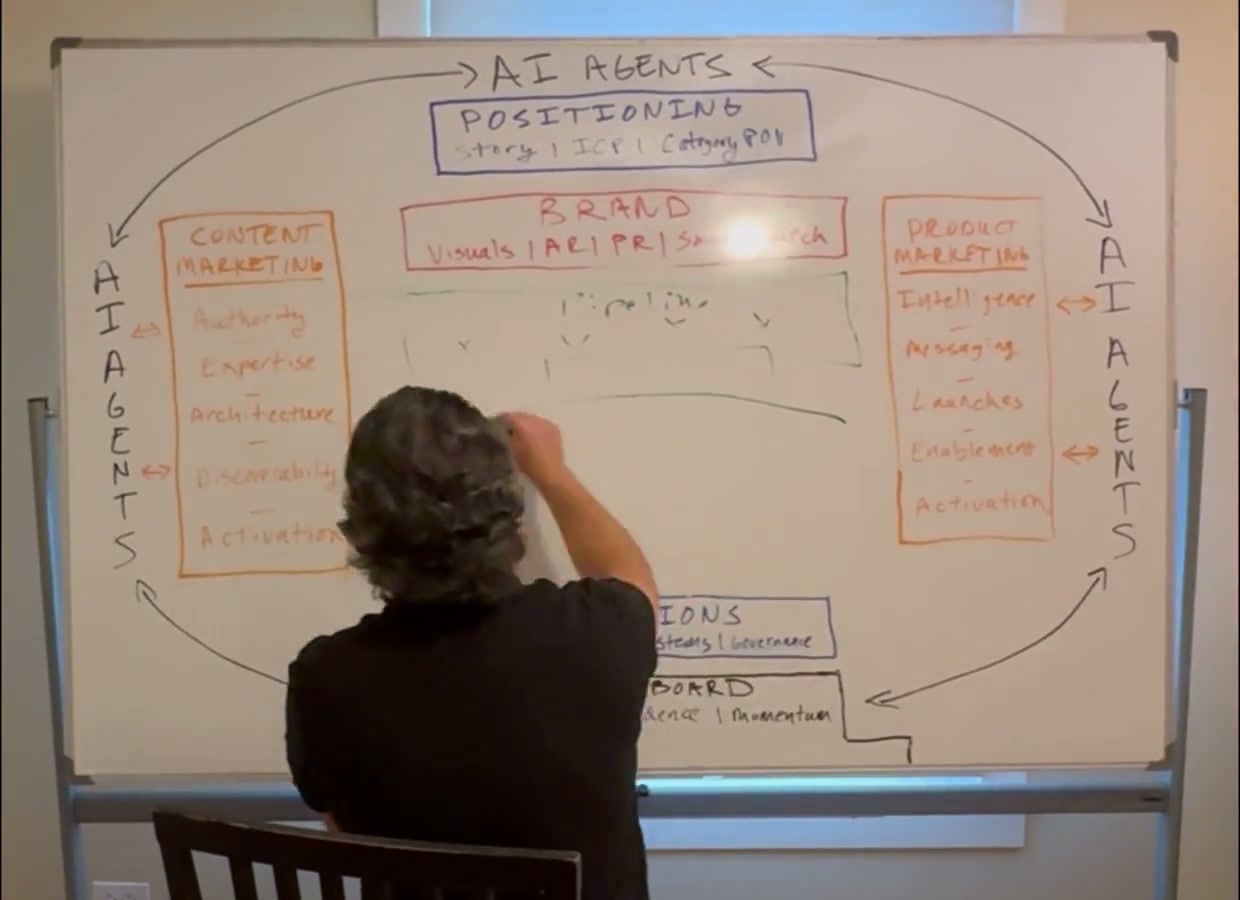
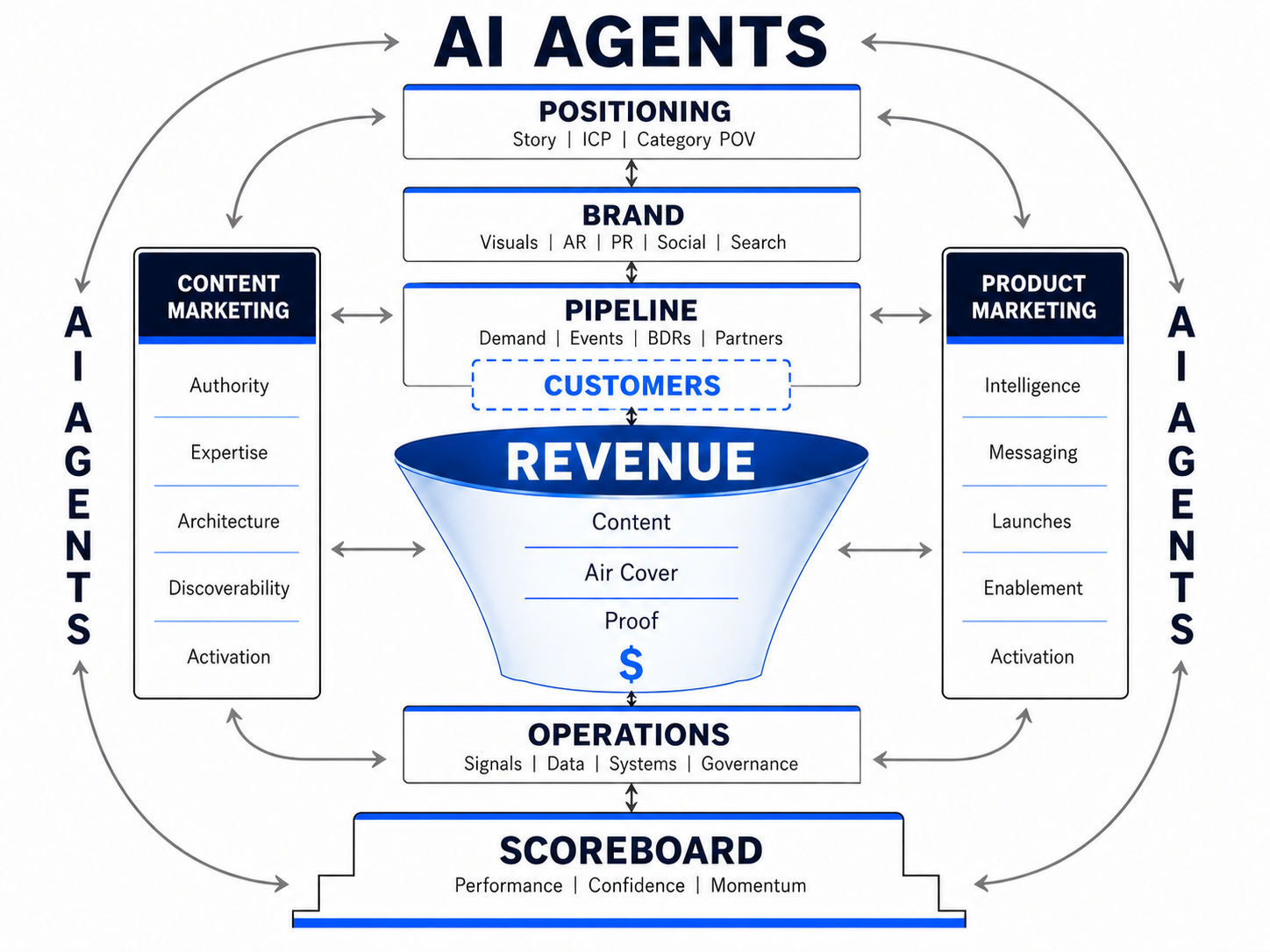
Marketing Rebuilt is the destination. The AI Marketing Engine is how you get there: the system that turns signals into pipeline and revenue, with people and AI agents working together across ten connected capabilities. Created by Mark Tack, six-time B2B CMO, and the backbone of his book Marketing Rebuilt.
Score your engine now.
How's your marketing engine performing? Where are you strong? Where are you struggling? Score all ten capabilities, print your results, and revisit them in 90 days to see what's changed.
- Struggling 1–4
- Developing 5–7
- Strong 8–10
YOUR ENGINE
Scored: 0 of 10 capabilities
Average: 5.0/10 · Developing (provisional)
Score all ten capabilities to complete your baseline.
Your lowest scores: AI Agents (5), Scoreboard (5), Positioning (5), Brand (5), Pipeline Generation (5), Customer Marketing (5), Revenue Acceleration (5), Content Marketing (5), Product Marketing (5), Engine Operations (5). These are good places to start. Which one would make the biggest difference if you improved it?
Questions CEOs ask.
What is the AI Marketing Engine?
The AI Marketing Engine is a framework for running B2B marketing as one connected system of ten capabilities, with people and AI agents working together to turn signals into pipeline and revenue. It was created by Mark Tack and is the backbone of his book Marketing Rebuilt.
Who created the AI Marketing Engine?
Mark Tack, a six-time B2B CMO. He first published the framework as The Marketing Engine in 2018, expanded it as The Growth Engine in 2020, and rebuilt it as the AI Marketing Engine in 2026.
What are the ten capabilities?
AI Agents, Scoreboard, Positioning, Brand, Pipeline Generation, Customer Marketing, Revenue Acceleration, Content Marketing, Product Marketing, and Engine Operations. Each one gets its own chapter in Marketing Rebuilt.
How is this different from marketing automation?
Automation runs a workflow a person set up in advance. The AI Marketing Engine is an operating model where signals start the work before anyone notices, agents execute across capabilities, and humans govern the outcomes. Automation makes existing work faster. This changes how the work begins.
How do AI agents work with a B2B marketing team?
Agents do not replace the team and they do not sit at the center of the engine. They wrap around it, showing up wherever they help: researching, drafting, monitoring, routing, and executing. People set the direction, make the judgment calls, and own the outcomes.
How does the framework help generate pipeline?
Everything in the engine either creates pipeline, accelerates it, or expands it. Pipeline Generation covers demand, events, BDRs, and partners. Customer Marketing covers expansion from existing customers. Revenue Acceleration helps convert the opportunities already in flight.
Can an existing marketing organization adopt this?
Yes, and most do. Rebuilding means fixing what no longer fits, strengthening what does, and connecting the whole thing around a new way of working. It is not starting over. Most companies find a mix: some capabilities working well, some needing attention, and some barely there.
How long does it take?
Most transformations take twelve to eighteen months from honest diagnosis to a system the business actually trusts. Technology is the fast part. Trust is the slow part. The first ninety days should produce one working proof, not a portfolio of pilots.
Where to go next.
Score your engine with the Readiness Assessment, or get in touch.